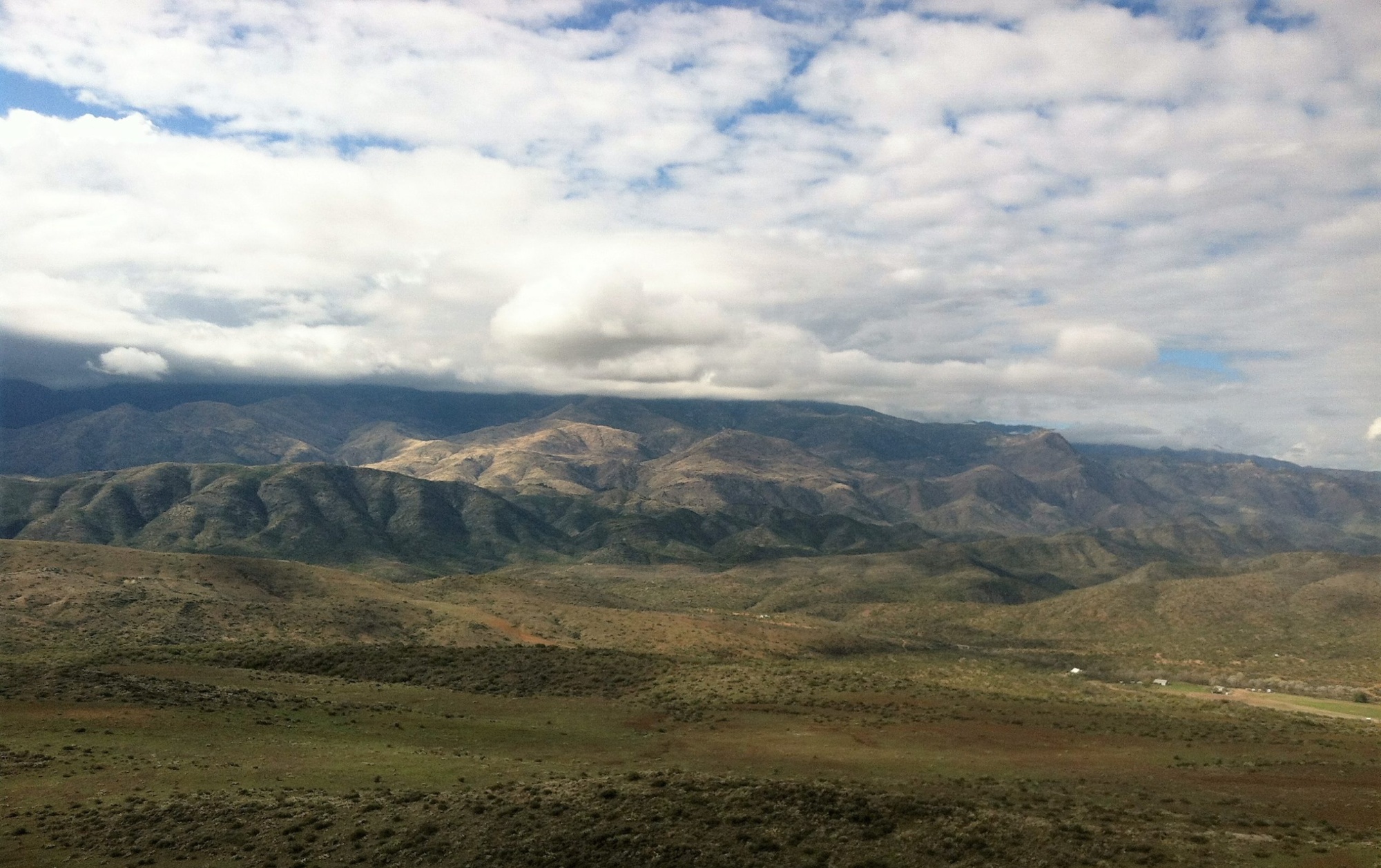

Huddling behind the center console, I was still freezing in my parka with three layers underneath. The kids read their books, the husband steered the boat –all seemingly unfazed. I didn’t know how cold 45⁰ at 15 miles per hour could be. Turns out, there’s a lot I didn’t know about this part of the earth.
Jack bought a bay boat and the red canyon walls of Lee’s Ferry were calling – in December. Why not? Lee’s Ferry is a fisherman’s paradise on the Colorado, especially if you’re into fly fishing and rainbow trout. This is about all I knew—that and the fact that it’s in a canyon, which grows into the famous Grand one farther south.
We planned a two-night stay in a place that can be best described as something between a motel and a trailer park, but it was the only game in town that time of year. It huddled at the base of the Vermilion Cliffs which—and this is no exaggeration—glowed like embers at sunset. When the winter sun vanished, there was cold, the kind that stings the skin, and a black sky bursting with stars.
The rooms were a dreary composite of frayed carpet, peeling linoleum and an ancient stove. But we were out of the frosty air and had a place to fix a meal.
In warmer months, Lee’s Ferry is the gateway to Colorado River excursions through the Grand Canyon.
In the dead of winter, the placid stretch upstream to Glen Canyon Dam draws as many as three fishermen a day.
The canyon was beautiful, but it was hard not to shiver with the sharp chill created by movement over the water. A stop at a campsite was a mercy. It led to a short interpretive hike with petroglyphs. I am told a half-dozen fish were caught and released while my daughter and I examined prehistoric art.

Back at the boat ramp, we were drawn to the evocative ruins near the parking area. They were built by Mormon settlers in 1874 out of the local red sandstone to serve as a fort—a response to rising tensions with the Navajo. When the threat did not materialize, it was repurposed into a trading post, then a residence, school, and mess hall.

From a window in the ruins I looked out on the quiet stream, trying to imagine a cable-ferry loaded with settlers. It was a rare spot that allowed wagon access from both sides of the river. The waters would’ve been dangerously swift and deep, but it was one of the few logical places where people could attempt to cross.
In 1776, Spanish Franciscan priests Francisco Atanasio Dominguez and Silvestre Vélez de Escalante along with twelve other men were the first Europeans to give it a shot.
They were returning to Santa Fe after falling short of their goal of finding an overland route to the California missions. The members of the beleaguered and starving Expedition, or more correctly, endured snowy travel in freezing temperatures and were surviving on horse meat. Their desperate return to Santa Fe ground to a halt at this very point where the Paria meets the Colorado.
For five days they tried to figure out a way to the other side. The Colorado’s depth and mighty current made rafting impossible. Two members of the party came close to death when they tried swimming across.
Ultimately they decided to cross forty miles upstream in Glen Canyon, though it was necessary to carve steps into the canyon walls to enable their remaining livestock to do it. Now submerged in Lake Powell, this momentous place was thereafter named the Crossing of the Fathers.
The historic marker at Lee’s Ferry makes no mention of the drama the Spanish expedition encountered here. It gives a relatively bland account of the site, simply listing its year of establishment in 1872 and change of ownership until becoming obsolete in 1928 when the Navajo Bridge was completed nearby.
But the ferry’s namesake was anything but bland. Almost 100 years after the Dominguez-Escalante Expedition, a man whose life parallels the rise and fall of a tragic hero arrived on the scene.
John Doyle Lee, once a highly regarded Latter-Day-Saint, then excommunicate of the Mormon Church and political scapegoat, settled this remote corner in 1870. He was an exile and a fugitive as he eked out a living. All this was an outcome of his decision to take part in one of the worst mass killings in American history.
The Mountain Meadows Massacre occurred over a period of five days when Mormon militia members disguised themselves as Native Americans and convinced a few Paiutes to join them in wiping out a band of emigrants camping in southern Utah on their way to California.
Historians say war hysteria and a growing fear of outsiders were some of the factors that led to the slaying of 120 men, women, and children. Those under seven years of age were taken in by local Mormon families, and the victims were hastily buried.
The Civil War and a lack of cooperation from the Mormon community stymied investigations, which weren’t concluded for nearly two decades. In the meantime, John D. Lee was keeping a low profile in a remote corner along the Colorado River in northern Arizona. He established a ferry service with the donation of a boat by none other than John Wesley Powell, the famed, one-armed Civil War hero, rafter of the wild Colorado, and Grand Canyon explorer extraordinaire.
In 1874, Lee is found, captured, and arrested. Of the nine individuals indicted for the massacre, he is the only one to go on trial. A first ends in a hung jury, the second with a conviction.
His sentence is death and is meted out in a way that by today’s standards would be considered bizarrely dramatic. He is marched to the location of the massacre and executed by firing squad.
We missed Lee’s homestead that day. Just a mile and a half from the boat ramp, it was also home to the families who came after him to operate the ferry. The aptly named Lonely Dell Ranch with its log cabins, stone ranch house, orchard, and cemetery offers a glimpse of the back-breaking labor it took to be self-sufficient in this stark and isolated place. In the solitude of a quiet, cold December day, it isn’t difficult to imagine.
Lee’s Ferry and Lonely Dell Ranch: https://www.nps.gov/glca/planyourvisit/lees-ferry.htm
Mountain Meadows Massacre: https://en.wikipedia.org/wiki/Mountain_Meadows_Massacre
Hi, this is a comment.
To get started with moderating, editing, and deleting comments, please visit the Comments screen in the dashboard.
Commenter avatars come from Gravatar.